Size menus on Hipobuy Spreadsheet listings, decoded
What sellers actually put in their size menus, how to turn each kind of size into a decision, and the return rules that make the first choice count.
Checked October 22, 2026Check what a centimetre number measures
Example: a shoe option prints “CM 26”. Before comparing it with a 26 cm foot, find out whether that number describes recommended foot length, insole length or a conversion label. They are not the same measurement.
| Number or label | Question before choosing |
|---|---|
| CM 26 in an option name | Which measurement does the seller mean, and is there a chart for this model? |
| An insole measurement | Can the insole be measured reliably, and how does it compare with a similar pair that fits? |
| Made-to-order size | What return conditions apply before you authorise that option? |
Use a specific request through the photo-note shortlist where relevant, and check what a photo can establish. A ruler can verify a dimension; it cannot guarantee comfort or suitability.
Chinese option labels you will meet
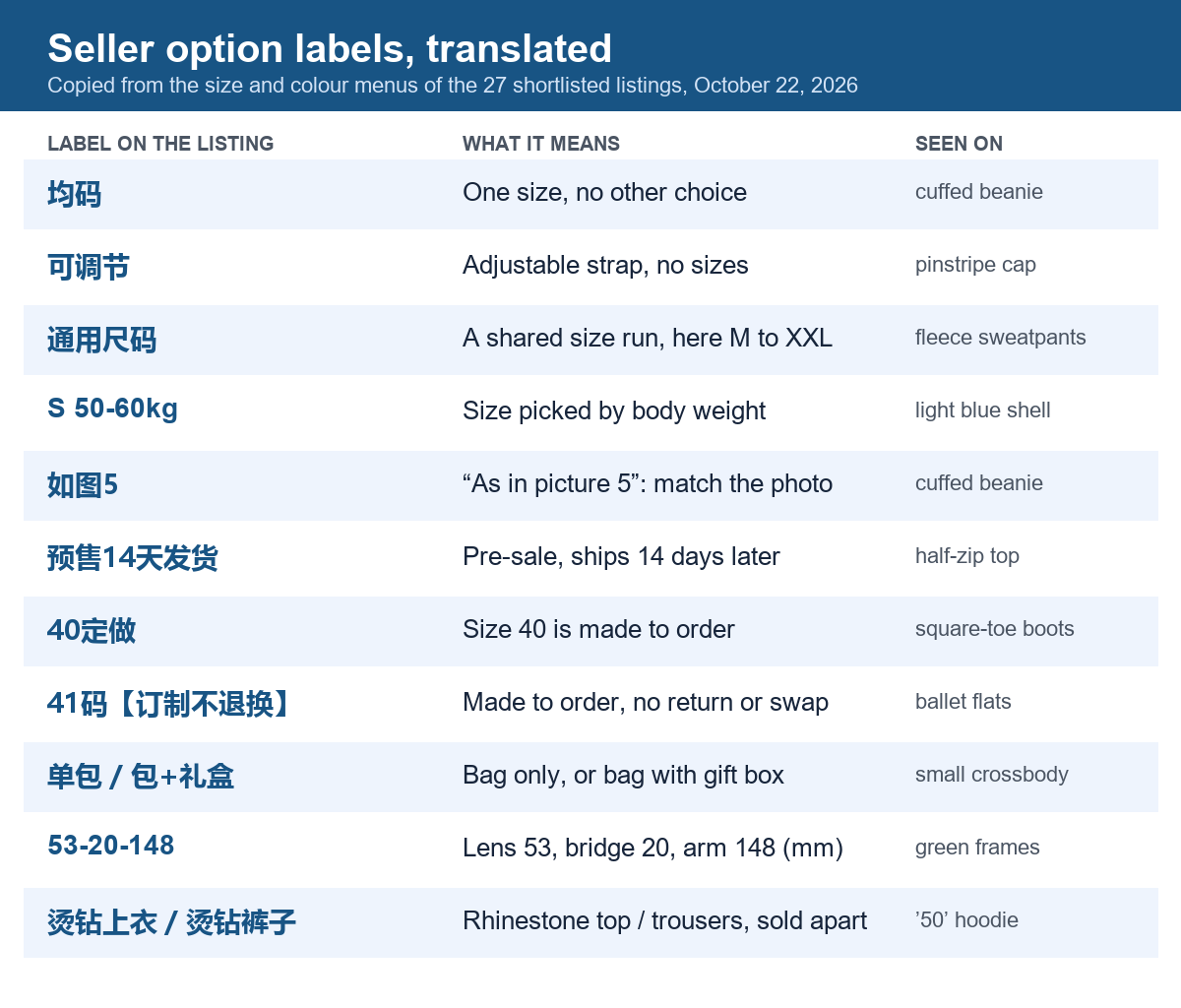
Size and colour menus on Chinese marketplaces are written by sellers, usually in Chinese, sometimes in both languages, and they often carry more than size. These eleven labels came from the 27 listings on this shortlist. Some are plain size words, such as 均码 (one size), 可调节 (adjustable) and 通用尺码 (a shared size run). Others are instructions or warnings that happen to sit in the size menu: 如图5 (as in picture 5), 预售14天发货 (pre-sale, ships in 14 days), 定做 (made to order) and 订制不退换 (made to order, no return or exchange).
If you see a label that is not in the table, paste it into a translator before ordering. The cost of a wrong guess is a whole return.
Weight bands, letter sizes and one-size
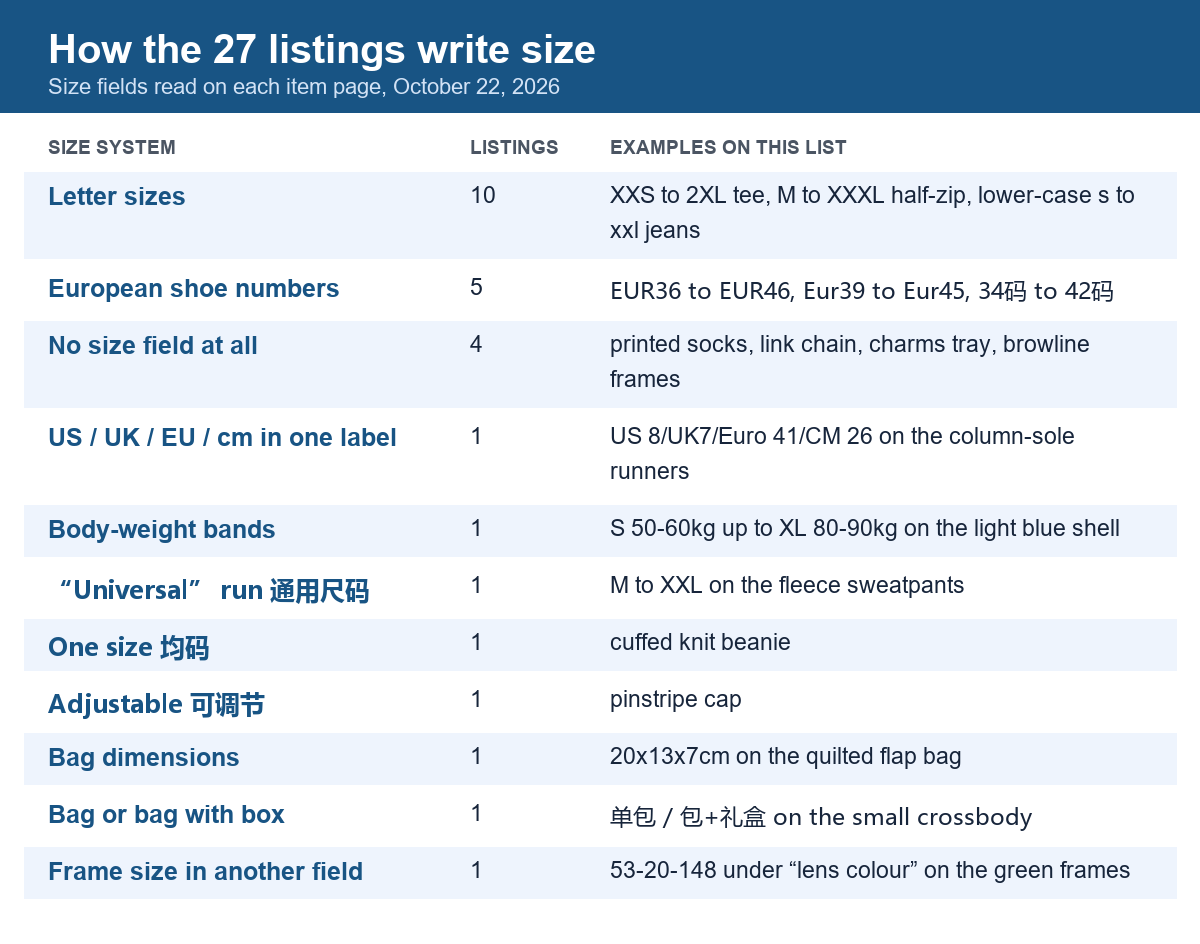
Across the 27 listings we found eleven different ways of writing size. Letter sizes were the most common, on ten listings, and the least informative: S to XL on jeans tells you nothing about leg length. One shell jacket sized by body weight, from S 50-60kg to XL 80-90kg. One pair of fleece sweatpants used a “universal” run that started at M. A beanie was one size and a cap adjustable. Four listings had no size field at all.
Our rule of thumb: the further a size system is from a measurement, the more a measured warehouse photo is worth. That is why every letter-sized garment on this list sits in tier two.
Shoe sizes: EU, US, UK and centimetres in one label
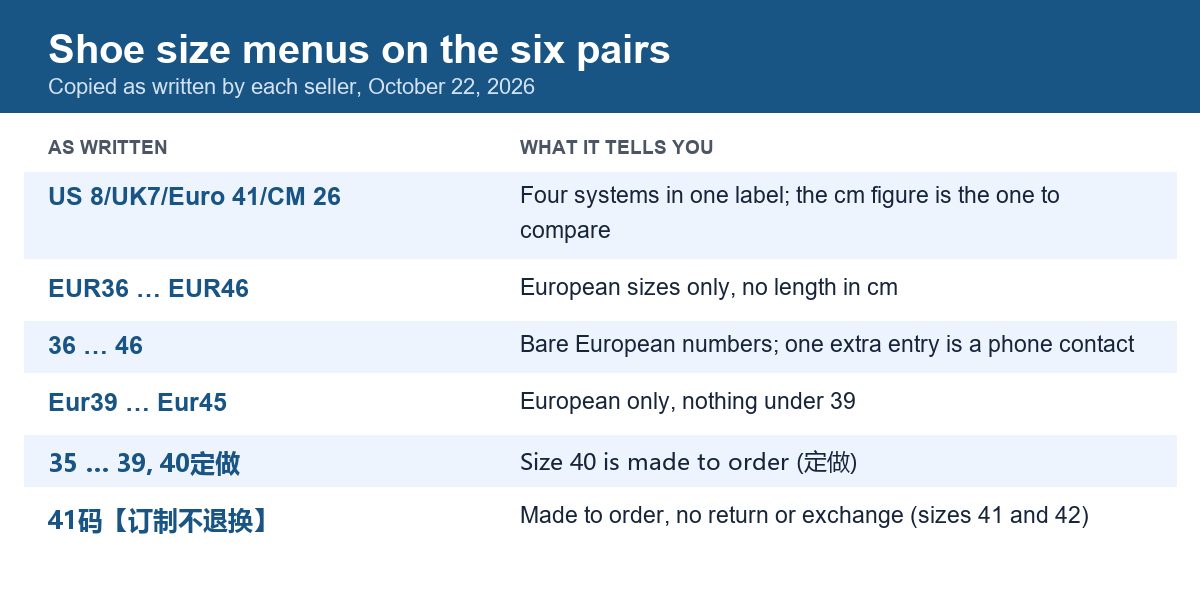
Six pairs, five ways of writing a size. The column-sole runners write each size four ways at once, for example US 8/UK7/Euro 41/CM 26, and skip some sizes entirely. The star low-tops use EUR36 to EUR46. The flat sneakers use bare numbers, 36 to 46. The work boots use Eur39 to Eur45, and the women's flats add the Chinese measure word 码 to each number.
When a centimetre figure exists, identify what it measures before comparing it with your own measurement. When it does not, ask for the insole length as a custom photo and compare it with a pair that fits you.
Frames and bags: the numbers that are sizes
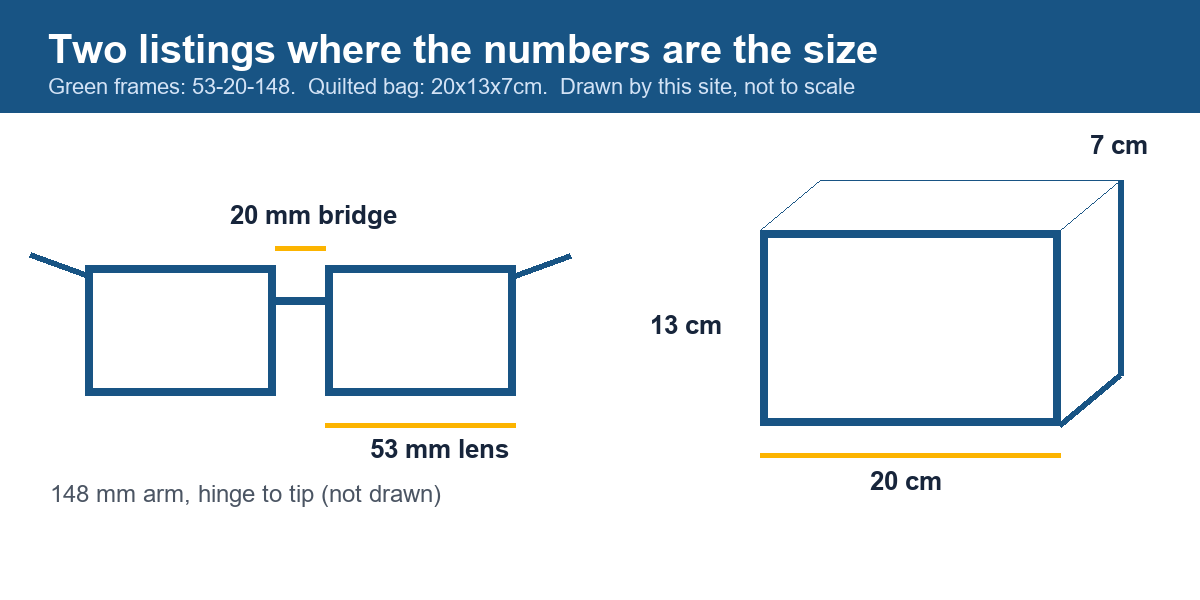
Two listings hide a real measurement in an unexpected place. The square green frames put 53-20-148 under the heading for lens colour; that is the standard frame size, read as a 53 mm lens, a 20 mm bridge and 148 mm arms. Compare it with the numbers printed inside the arm of glasses you already wear. The quilted flap bag uses its single size option for 20x13x7cm, which is width, height and depth.
The browline frames, by contrast, give no numbers at all, which is why their card asks for a photo of the inside of the arm.
Made-to-order sizes and the return rules
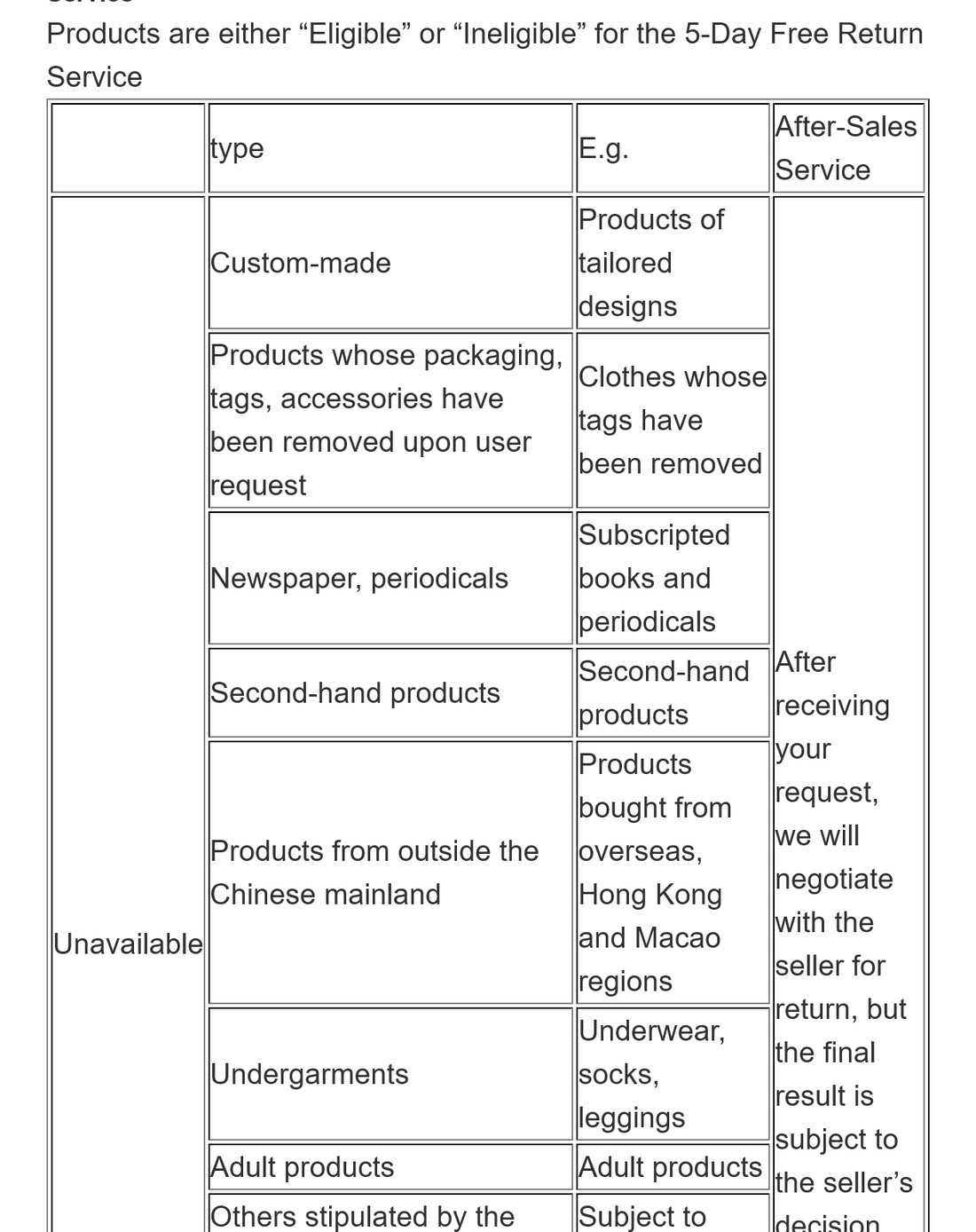
Two pairs on the list mark their top sizes as made to order: the square-toe boots in size 40 (40定做) and the ballet flats in sizes 41 and 42, flagged 订制不退换, no return or exchange. Hipobuy's returns table lists custom-made products as unavailable for its five-day return guarantee; it will negotiate with the seller on request, but the seller decides.
The same table excludes products whose packaging or tags were removed at your request, second-hand goods, goods from outside mainland China, and undergarments, which it spells out as underwear, socks and leggings. If you are ordering any of those, size carefully the first time. The full table is on Hipobuy's returns page.
If the size arrives wrong
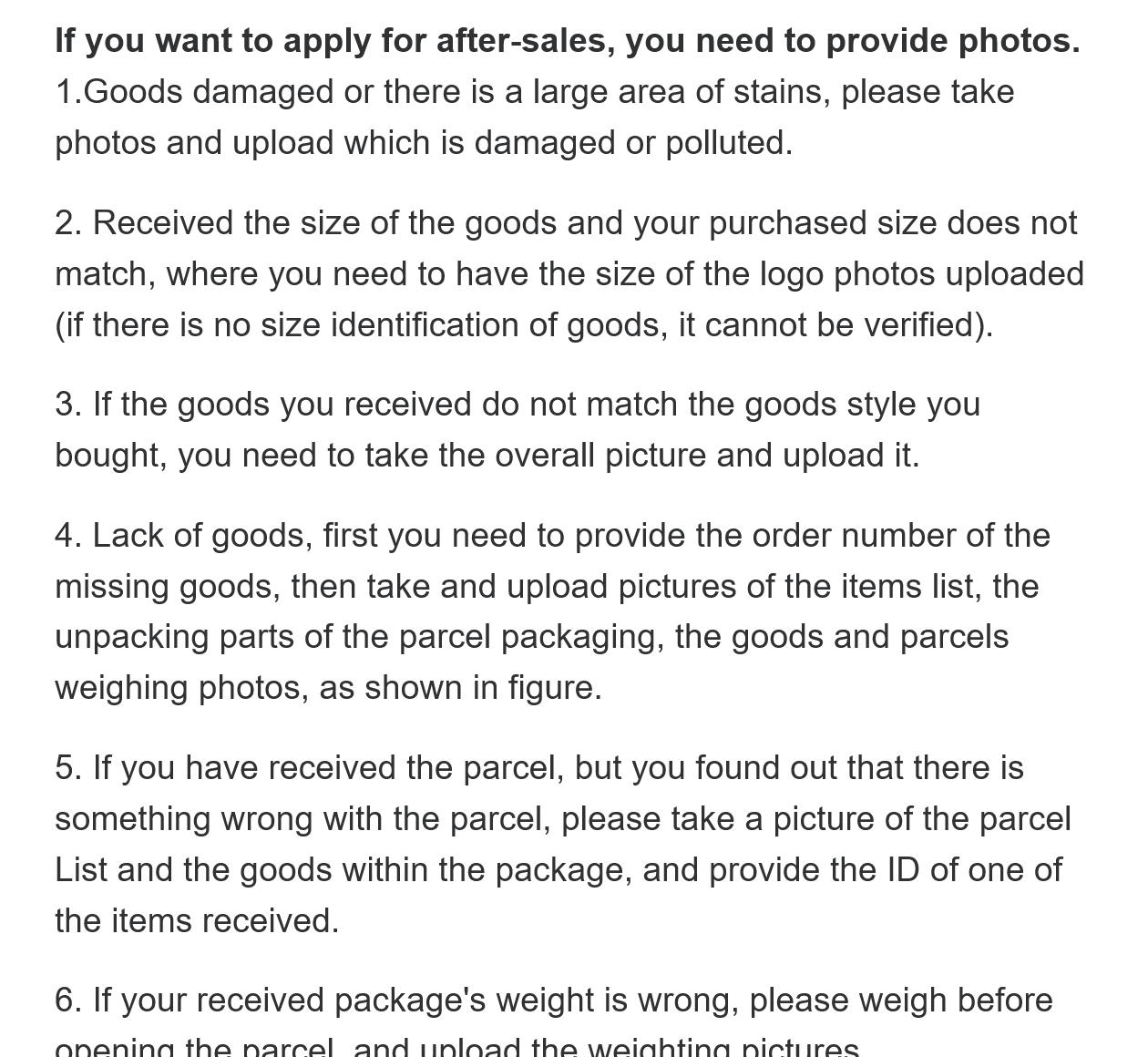
Hipobuy's after-sales page lists the photos it needs for each kind of claim. For a size that does not match what you bought, it asks for a photo of the size marking on the goods, and says that without a size marking the claim cannot be verified. Damage needs photos of the damaged area; a wrong style needs a photo of the whole item; a short delivery needs the order number, the packing list and weighing photos. Missing, damaged or defective goods must be reported within 72 hours of receipt.
That size-label rule is the practical reason to get the label into a warehouse photo when you can. If an item has no size label, ask for a useful measurement and confirm the applicable return conditions before relying on a size claim.
Judging a seller by the listing in front of you
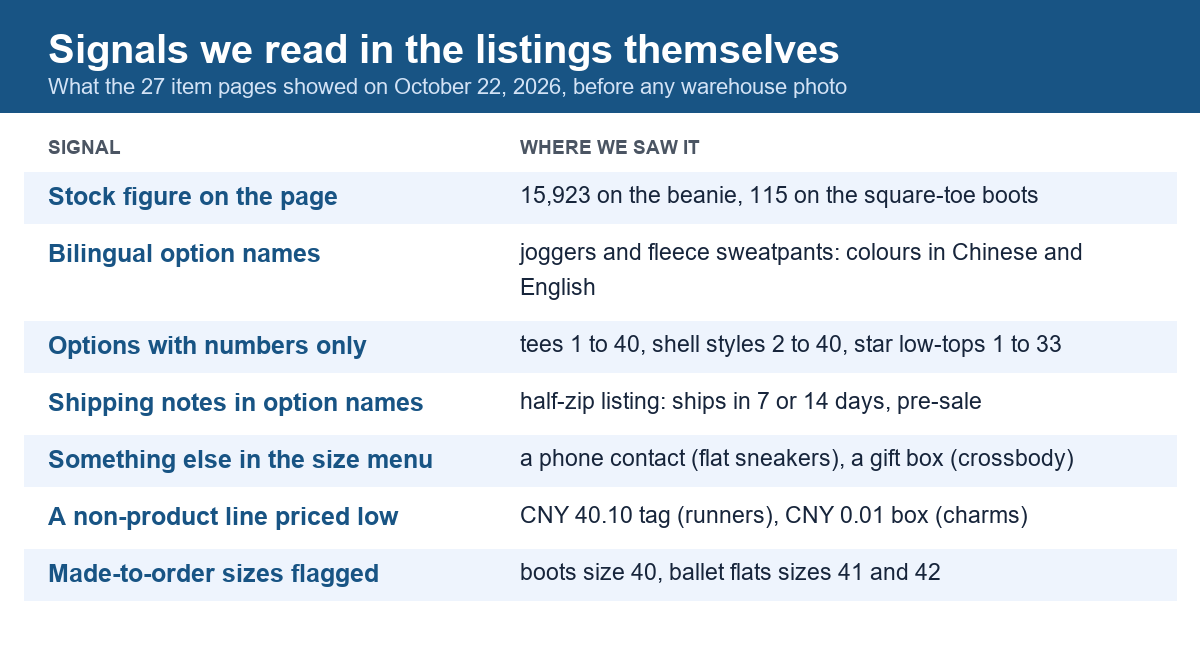
You cannot meet a seller, but a listing tells you a fair amount about how carefully it is run. Here is how to judge a seller from the item page alone, using what we read on these 27 listings:
- Clear option names. Colours written in Chinese and English, as on the joggers, suggest a seller used to overseas buyers. Options that are only numbers mean more work for you and more room for error.
- Honest notes. Pre-sale delays and made-to-order sizes written into the option name are a good sign; the seller is telling you before you pay.
- Clutter in the menus. A phone contact or a cheap add-on dressed up as an option is not fatal, but it means reading every line.
- Stock figures. Large stock on a basic suggests a steady product; very small stock on an expensive item means sizes may vanish between payment and purchase.
Good sellers still make mistakes, which is what the photos and the return window are for.